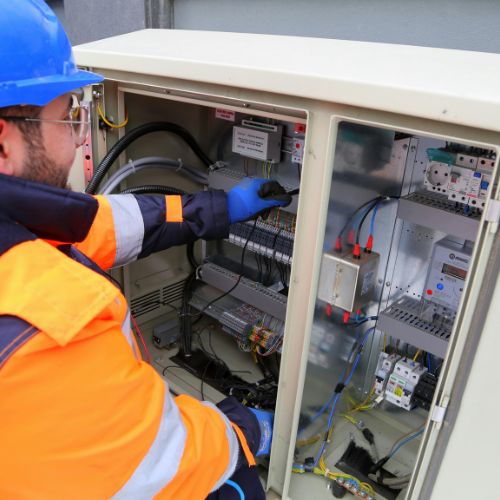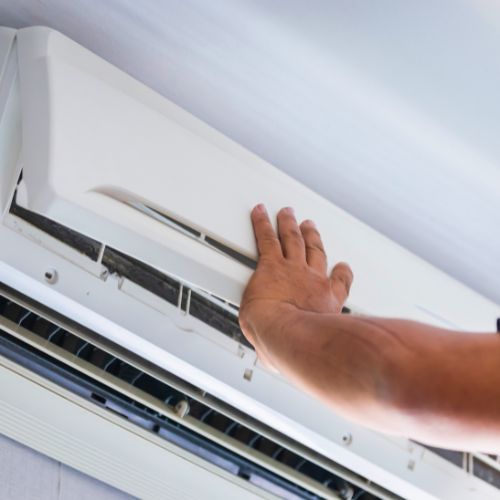
Air conditioning is becoming increasingly popular in UK homes and businesses, but fitting a split air-conditioning system requires more than mounting two units and connecting them to the electricity.
Installers must understand the electrical requirements, refrigerant regulations and safety procedures associated with the system. As the industry moves towards refrigerants with a lower environmental impact, the knowledge, equipment and training installers need are also evolving.
Unfortunately, not everyone offering air-conditioning installation has the correct qualifications or experience.
Here is what is changing and the warning signs to look for before employing an installer.
Why are air-conditioning installation requirements changing?
Many air-conditioning systems use hydrofluorocarbon refrigerants, known as HFCs. These gases can have a significant environmental impact if they escape into the atmosphere.
Great Britain is phasing down HFCs by 79% by 2030 compared with average use between 2009 and 2012. This is encouraging manufacturers to move towards refrigerants with a lower global warming potential.
However, some alternatives have different safety characteristics. Certain newer refrigerants may be mildly flammable, while some natural alternatives are more flammable and require different tools, risk assessments and working practices.
This means that an installer’s knowledge cannot stand still. They must understand the refrigerant inside each system and be competent to handle it safely.
What qualifications does an air-conditioning installer currently need?
Anyone working with F-Gas must hold the appropriate personal qualification. This applies to activities including:
- Installing new systems
- Servicing and maintaining systems
- Checking for leaks
- Recovering refrigerant
- Decommissioning old systems
Different categories of F-Gas qualification permit different types of work.
A Category 1 certificate allows an engineer to carry out all relevant activities. A Category 2 certificate permits more limited work, including installation and maintenance of systems containing less than 3kg of F-Gas, or less than 6kg where the system is hermetically sealed.
The appropriate qualification depends on the system and the work being undertaken.
Does the company also need certification?
Yes, in many circumstances.
A business, including a sole trader, must hold appropriate company certification when installing, repairing, maintaining or decommissioning stationary equipment containing F-Gas for other people.
This is separate from the engineer’s personal qualification.
Therefore, customers should check both:
- Whether the individual engineer holds the correct qualification.
- Whether the company holds the required certification.
A company logo, professional van or attractive website is not evidence of F-Gas certification.
Are new qualifications being introduced?
Potential changes are being considered as Great Britain reforms its approach to F-Gases and moves towards alternative refrigerants.
Government consultation documents have discussed competence requirements for installers handling flammable refrigerants. This is important because an existing F-Gas qualification should not automatically be treated as evidence that someone is competent to work with every alternative refrigerant.
However, customers and installers should be careful about claims that a particular new qualification has already become compulsory across the entire industry.
Some future requirements are still being developed. Confirmed legal requirements should always be checked through current government guidance, recognised certification bodies and the manufacturer of the equipment being installed.
It is also important not to treat European Union deadlines as though they automatically apply in Great Britain, which operates under its own regulatory framework.
Red flag 1: They cannot provide evidence of F-Gas certification
A reputable installer should be willing to explain which certification they hold and why it is appropriate for your system.
Be cautious if they:
- Avoid answering questions about F-Gas
- Claim that certification is unnecessary
- Say that their electrical qualifications cover the refrigerant work
- Refuse to provide certification details
- Suggest that another person can “sign it off” without attending
Electrical competence and refrigerant-handling competence are not the same thing.
Red flag 2: They will install equipment purchased online without checking it
Air-conditioning systems are not universally suitable for every room or property.
Before agreeing to install a customer-supplied unit, a professional should check:
- The required heating and cooling capacity
- The refrigerant used
- The manufacturer’s installation requirements
- The electrical supply
- The proposed indoor and outdoor positions
- Pipework distances
- Condensate drainage
- Ventilation and access
- Noise and neighbouring properties
- Warranty requirements
An installer who agrees immediately without asking any questions may not be assessing the job properly.
Red flag 3: There is no survey before the quotation
Quoting solely from a photograph or brief message may not provide enough information for a reliable installation price.
A proper assessment helps establish the most suitable system, where it can be positioned and whether additional electrical work is required.
Without a survey, unexpected costs and installation compromises are more likely to appear later.
Red flag 4: They ignore the electrical requirements
The air-conditioning system needs an electrical supply that complies with the manufacturer’s instructions and is suitable for the installation conditions.
Depending on the system, the work may require:
- A suitable circuit
- Appropriate circuit protection
- Safe isolation
- Correct cable selection
- Earthing and bonding considerations
- Inspection and electrical testing
Be wary if an installer intends to use an existing socket or convenient power supply without first checking that it is suitable.
Red flag 5: They do not discuss the refrigerant
The installer should know which refrigerant the equipment uses and how it must be handled.
Different refrigerants present different risks. Appropriate tools, procedures and training may be required, particularly when a refrigerant has flammable properties.
“It is all just air conditioning” is not a sufficiently professional answer.
Red flag 6: They cannot explain how the system will be sized
A system that is too small may struggle to reach the desired temperature. A significantly oversized system can also perform poorly, cycle unnecessarily and fail to control the room effectively.
Professional system selection should consider more than the room’s floor area. Other factors include:
- Ceiling height
- Window size and orientation
- Insulation
- Number of occupants
- Electrical equipment
- The room’s purpose
- Expected heat gain
Be cautious of anyone who recommends a system without gathering enough information.
Red flag 7: They offer no paperwork or commissioning records
Once the installation is complete, the system should be commissioned and checked.
Ask what documentation you will receive, such as:
- Installation records
- Commissioning information
- Electrical certification where applicable
- Manufacturer warranty details
- Operating instructions
- Maintenance recommendations
- Installer and company certification details
A verbal assurance is not a substitute for proper documentation.
Red flag 8: The quote is unusually cheap
The cheapest quotation is not always the best value.
A very low price may exclude essential work such as:
- A proper survey
- Electrical upgrades
- Condensate management
- Suitable mounting equipment
- Commissioning
- Certification
- Warranty registration
- Aftercare
Compare what is actually included rather than looking only at the final figure.
Red flag 9: They say the system will never require maintenance
Air-conditioning systems require ongoing care to operate efficiently and hygienically.
Filters need cleaning, components should be checked and the system may require periodic professional servicing. Commercial systems may also have additional inspection, record-keeping or leak-checking requirements.
An installer should explain the maintenance requirements rather than treating the job as finished forever once the unit is switched on.
Questions to ask before hiring an installer
Before accepting a quotation, ask:
- Do you hold the appropriate personal F-Gas qualification?
- Does your business hold company F-Gas certification?
- Are you trained to work with this system and its refrigerant?
- Will you survey the property before installation?
- How have you calculated the required system size?
- Who will complete and test the electrical work?
- What is included in the quotation?
- What documents will I receive?
- Will you register the manufacturer’s warranty?
- What maintenance will the system require?
- Are you appropriately insured?
A trustworthy installer should welcome reasonable questions and give clear answers.